
GO TO
RELATED
OUR PRACTICE AREAS
Selling a Business in Queensland?
Make the Most of Your Business Sale
Selling your business can be a complex process. You need careful planning and advice to get the best financial return and avoid unexpected issues. Our experienced business lawyers can guide you through every step of the process, from pre-contractual negotiations to settlement.
Preparing your Business for Sale – Tips for Success:
Build a Strong Management Team:
A capable management team will reassure potential buyers that the business can continue to operate successfully after you sell.
- Improve Your Financial Performance:
Find ways to reduce costs and improve profit margins.
- Strengthen Your Brand and Reputation:
Ensure your business has a reputation for high-quality products or services.
- Update Your Online Presence:
A robust online presence can make your business more attractive to potential buyers.
Ensure Your Business Assets are in Good Working Order:
Regularly maintain your equipment and property to avoid surprises for potential buyers.
- Manage Your Contracts:
Use formal, written contracts with customers and suppliers to protect your business interests.
- Develop a Business Plan:
A clear business plan will demonstrate the future potential of your business to potential buyers.
- Resolve Outstanding Legal or Financial Issues:
Address any outstanding legal, tax, or superannuation matters before you sell your business.

Get Expert Guidance from CLO Lawyers
Selling a business involves many steps. CLO Lawyers’ Toowoomba-based commercial law team is here to help you through every stage of the process, from preliminary negotiations to final settlement.
Navigating the Complexities of Buying or Selling a Business: Asset Sale vs. Share Sale
The purchase or sale of a business is a significant endeavour requiring careful consideration and involving complex decisions and negotiations. It is essential to work through the advantages, challenges, and implications of the deal structure that forms the foundation of the business transaction.
Two distinct options are an asset sale and a share sale. The differences and flow-on effects of these options are discussed below.
Business Types: Sole Proprietorships, Partnerships and Companies
Any organisation conducting commercial activities to earn a profit is engaged in business. Businesses take various forms, from small, sole proprietorships to large corporations.
For sole proprietors or partnerships, selling the business usually means selling its assets, such as equipment, inventory, and customer contracts.
When it comes to businesses owned by a company, the sale can be structured in one of two ways: an asset sale or a share sale. Each approach has unique characteristics that affect both the seller and the purchaser.
Business Sales for Companies: Asset Sale or Share Sale?
Understanding Asset Sales
An asset sale involves the purchase of specific assets owned by a company, such as property, plant and equipment, machinery, stock, goodwill, and intellectual property.
In this scenario, the transaction occurs between the company and the buyer, with the seller retaining company ownership.
Because a buyer acquires assets used in the business and not the corporate vehicle that owns the business, they do not have exposure to future claims relating to the conduct of the business before the sale. Exceptions are accrued benefits of employees taken on by the buyer and liabilities that support the trade revenue stream acquired.

Key Features of an Asset Sale
1. Company Ownership
The seller keeps the company, transferring only the selected assets.
2. Documentation
The parties will enter into a business sale agreement documenting the assets being sold.
3. Asset Transfer
The buyer must meet the legal requirements for transferring the assets, which may involve third-party consent. ‘Registered’ assets, such as trademarks and business names, may require compliance with the requirements of the relevant regulator.
4. Liabilities
The buyer assumes liabilities related to the acquired assets.
5. Key Contracts
Contracts need to be assigned to the buyer, often requiring third-party consent. Some government licenses and permits are non-transferrable. In such cases the buyer must secure their own license or permit before taking over the business.
6. Employees Transition
The buyer must make new offers of employment to each employee and will assume all accrued entitlements (annual leave, long service leave).
7. Tax Considerations (GST, transfer/stamp duty)
Transfer duty applies if the sale includes land. GST may be exempt if the sale qualifies as a “going concern”. This means that the buyer must acquire everything necessary for the continued operation of the business.

Exploring Share Sales
In a share sale, the buyer purchases the company’s shares, acquiring the entire business, including all assets and liabilities.
In this instance, the transaction occurs between the company’s shareholders and the buyer of the shares. The ownership of the company changes.
Because a share sale involves taking over the company, completion of the share sale is typically conditional upon satisfying an extensive due diligence process. The sellers are normally required to provide comprehensive warranties and indemnities concerning the share sale.
Features of a Share Sale
1. Company Ownership
The buyer acquires the entire company, including its history and potential legacy issues.
2. Documentation
The parties will enter into a share sale agreement containing comprehensive warranties and indemnities.
3. Asset and Liability Continuity
All assets and liabilities remain with the company.
4. Assumption of Liabilities
The buyer assumes all existing liabilities, including those related to financial reporting and tax compliance.
5. Contractual Consideration
Most contracts will continue, though some may include “change of control” provisions that require the consent of the other party or in the worst case scenario, allowing termination of the contract.
6. Employee Continuity
Employees remain under existing contracts, inclusive of any employee liabilities.
Asset and share sales carry commercial, taxation, and legal risks that must be carefully evaluated. Understanding these risks is essential for sellers and buyers to navigate the transaction successfully.
Each approach offers advantages and disadvantages, and proper planning can mitigate risks to achieve the desired outcome.

How CLO Lawyers Can Help
CLO Lawyers has a team of experienced business lawyers who can provide you with expert advice and guidance throughout the sale process. We can assist you with:
- Pre-Deal Advice:
We help you negotiate the terms of the sale with potential buyers to ensure you get the best price for your business.
- Due Diligence:
We assist with investigations to assess your business’s value and risks and guide you through the due diligence process to provide potential buyers with relevant information about your business.
- Leasing:
If your business operates from a leased premises, we advise you on lease assignments and landlord negotiations.
- Negotiations:
We provide expert advice on negotiating terms and special conditions.
- Drafting Key Documents:
We draft all legal documents required for the sale, including contracts that protect your interests and comply with legal requirements.

Heads of Agreement
Often the first step is a Heads of Agreement. This outlines the key terms both parties want in the sale contract. It’s usually non-binding but helps reduce the legal costs and simplifies the task of drafting the final contract.
Due Diligence - Protect Your Business Information
Prospective buyers will want to thoroughly investigate your business to assess its value and any risks associated with buying. They will review as much financial information as you are prepared to show them.
Before sharing any details, ensure buyers and each key person involved in the decision-making sign a confidentiality agreement.
Here's how to prepare for due diligence:
- Document Review:
Ensure records align with sale discussions.
- Non-Disclosure Agreements:
Have buyers sign confidentiality agreements.
- Be Ready:
Prepare to answer questions about your business, including strengths and perceived weaknesses.
Key Considerations Before Signing a Contract/Agreement
To avoid pitfalls, it is important to consult with a solicitor before signing a formal Agreement. You will need to consider matters such as the taxation consequences of the sale, adjustments for liabilities such as employee entitlements and retail business statutory obligations.
Consider the following issues before entering into a formal agreement:
- Tax Implications
Understand how the sale affects your taxes.
Liabilities
Adjust for employee entitlements and legal obligations.
Update Business & Financial Records
Keep all business records and financials up to date.
Business Valuation
Justify your sale price with formal valuations.
Prepare Schedules
Prepare schedules of debtors, creditors, and assets.
Collate Relevant Documents
Gather lease, ownership, or rental documents.

The Contract or Agreement
1. Business Asset Sale
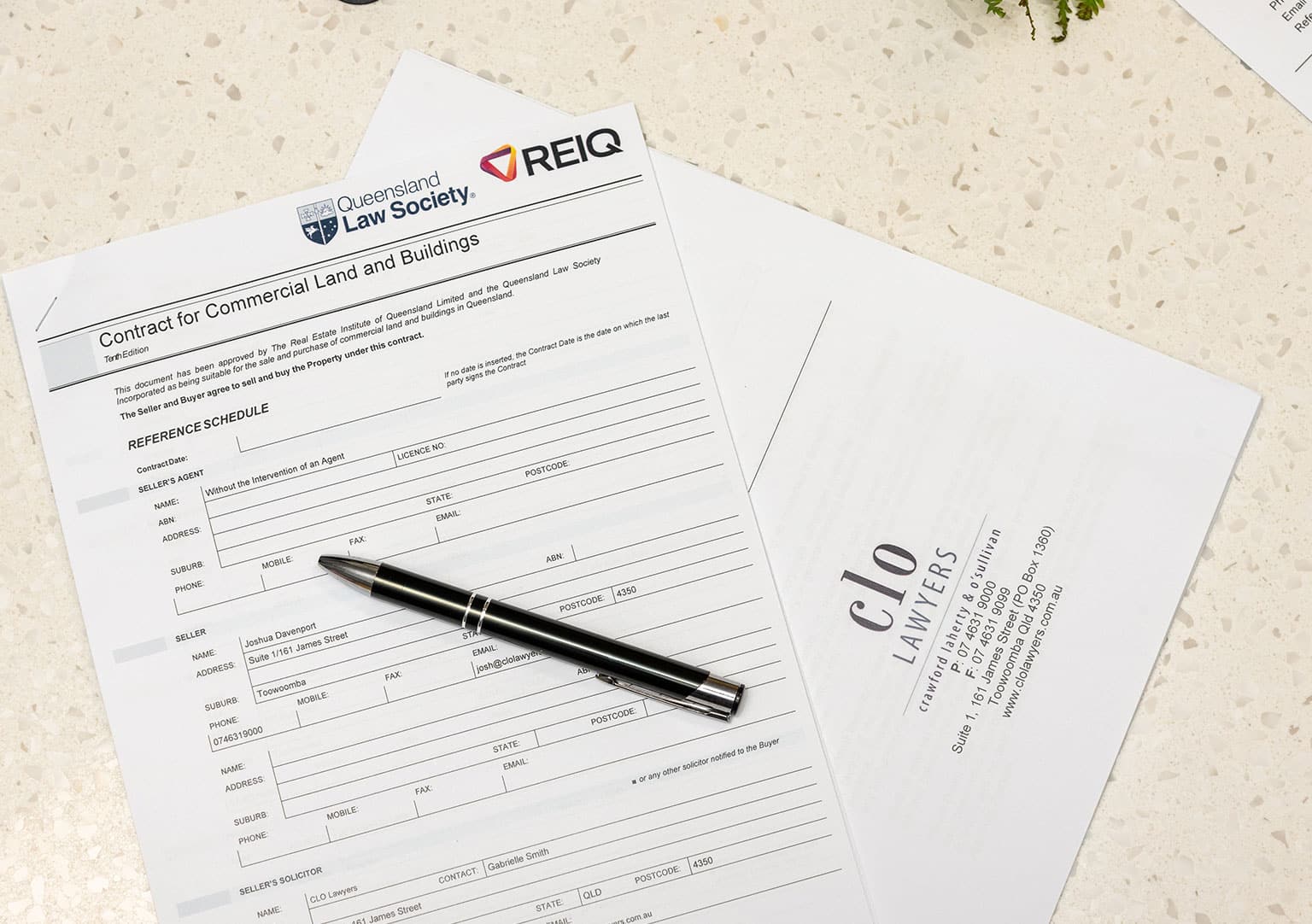
The REIQ Sale of Business Contract is standard in Queensland. We ensure your business contract is tailored to your needs. It will cover the following:
- Transfer of business name, premises lease, and critical assets, permits, and licenses.
- The price of existing stock and fixtures and fittings included in the sale.
- The inclusion of appropriate warranties and representations with respect to business sales performance.
- Any appropriate security for each party’s obligations.
- A goodwill figure and any clawbacks or retentions.
- Restraint of trade on the vendor.
- Retention of key employees and treatment of employee entitlements
2. Company Share Sale
A company share sale is a process where a party sells their shares in a company to a buyer. This transfer of ownership is formalised through a share sale agreement, which records the details of the transaction and ensures both the buyer and the seller are clear on the terms.
The share sale agreement outlines:
- Rights and Obligations: What each party is responsible for and what they are entitled to in the transaction.
- Required Actions: What actions need to be taken by both parties.
- Timing and Conditions: When these actions should be completed and under what conditions.
Key points covered in a share sale agreement include:
- Share Details: The exact number and type of shares being sold.
- Purchase Price: The amount the buyer will pay for the shares.
- Payment Method: How and when the payment will be made.
- Pre-Sale Conditions: Any specific requirements that must be met before the sale is finalised.
- Warranties: As the Buyer takes the Company with all liabilities, there are key warranties and guarantees from the selling directors that must be obtained.
Leases and Licensing
Lease Assignments and Licenses
If your business has a lease, you will need to ensure that the landlord agrees to assign it. We liaise with the landlord to obtain consent to the assignment and advise you on any consent conditions. We also advise on a lease surrender so the buyer can negotiate a new lease.
We ensure compliance with the Retail Shop Leases Act 1994 (Qld) for retail leases.
We also determine what business licenses must be assigned or cancelled, depending on the business type and required licenses.
Transferring and Business Handover
CLO Lawyers will prepare transfers and other documents that must be completed and exchanged before settlement.
After settlement, there is usually a handover process.
Ensure a smooth transition by planning the handover in advance. Key steps include:
- Client and Supplier Introductions:
Connect the buyer with key stakeholders.
- Employee Introduction:
Introduce and prepare your team for the new owner.
- Training:
Provide the buyer with the necessary training.
- Transfer Details: Hand over keys, codes, and login details.
- Notification:
Inform utilities, banks, Australia Post, insurers, and relevant parties of the change.
Why Choose CLO Lawyers?
At CLO Lawyers, we regularly prepare and advise in relation to commercial and retail shop leases across Queensland.
Our comprehensive legal services include:
- Lease Drafting And Review
- Negotiation Support
- Legal Compliance Advice
- Dispute Resolution
Our business and commercial lawyers provide personalised advice, ensuring you fully understand your rights and obligations.
We are your trusted legal partner, offering a comprehensive service from drafting and negotiating leases to resolving disputes.